Joe Alterio's blog on illustration, comix, design, animation, and other bouts of total awesomeness.

Tuesday, December 26, 2006

In the spirit of the season


I kvetch a lot about my desire to see more of my work in print and all that, but in the grand scheme of things, I have a lot of things to be really grateful for. One thing that I've been especially grateful for is the beauty of "The Inter-web", and that it's allowed me to come in contact and make friends with a whole host of people that share my sensibilty. I'll try and post more about these folks in the coming weeks; one of these people is Colin White.

I've been wanted to blog on Colin for a while, because I consider link love on this blog to be one of the sincerest forms of flattery, and I really admire what Colin does. Not only does he have a great eye for presenting specific pieces of scenes that set a tone (admittedly the type of stuff I tried to do in 365), but he's also got a simplicity of line that I wish I could capture: he doesn't obsess over tiny details, and his gesture-like work is as strong and evocative as some of the most manically detailed stuff I've seen.

He can do introspective stuff, experimental stuff, and just good gag strips, too. He's a great talent. He also produces so much, so well, so quickly , he kinda pisses me off. Oh well.

Look for something Colin and I will be collaborating on some time this next year. Yeah!

Saturday, December 23, 2006

Tripping Over Words

My plan was to throw the new episode up by last night, but I was a day late and dollar short: I had just enough time to only just finish, without getting to upload, so it'll be another week until it's up. Sorry. I'm trying to get on a better schedule. Comics is hard work, yo.

We're in Seattle now, "home" for the holidays, and without my requisite toys and drawing boards, so I'm a bit adrift in terms of what to do with myself: I figured, if anything, I could get some writing done, for future projects and self-edification. It would be good for me, a nice, jaunty period of self-improvement, in which I could bang out all those projects I've been wanting to get down for the past four months.

The problem is that I just...can't...seem...to...do it.

And so I pose this problem to you, dear readers: do you need warm up time to? I remember reading about George Orwell, how he could get up at 2 PM, sit down at his typewriter, write steadily for two hours, and then go get drunk. And all I could think was: HOW?!

I need a good two hours of just writing garbage until sentences start coming out right. And with drawing it's even worse: I have "Shame Sketchbooks", where I put all the stuff that will never see the slight of day, until my pencil starts behaving.

Am I the only one?

Monday, December 18, 2006

Ward-O-Matic


Ward Jenkins has some cool ass stuff on his blog, like a bunch of awesome examples (like the one above) of scanned mid- century illustration, when everyone from famous artists to industry hacks decided that coloring inside the lines was for chumps.

It's a little animation-nerdy, but if your not interested in that type of stuff, what're you doing looking at THIS blog, anyways?

Also, check out his Flikr Pool, The Retro Kid. Score!

Friday, December 15, 2006

Sketchblog 12/15/06

Back at it after a brief visit back to Beantown. Great to see everyone back home. Ups and downs, strikes and gutters. You know how it goes.

Today's sketchblog date is a little disingenuous, because I actually did this work back in October, but I'm, busy working on Episode Three, and while it's not ready yet, I wanted to put something up on here. Consider this the first entry - over the past three months, I've had three (!) gigs in which I was hired to draw robots - in what is the clearest sign that I am becoming "That Robot Guy". *sigh*

Blue Flavor wanted a cool, accessible spokesman for it's work, and because of their heavy expterise in the web and usability, a robot seemed like a great idea. Their sloagna was 'We Speak People', and the notion of that coming out of a robots mouth struck everyone as humorous. On top of that, they're all comic book nerds at heart (aren't we all?), and so the possibility of using comic art to appeal to their clients excited both of us. Below is some intial sketches, finishing off with the finals they went for. I'll be doing an actual comic for them later, too. Dude! Comics for money! Sweet!

Oh, and Rebholz, this post is for you, sucka.


Click on images to enlarge.

Wednesday, December 06, 2006

Sketchblog 12/6/06 II


This the birthday card I just drew for my sister: much to the agog of common decency, she's into fur. But then, I'm inot taxidermy, so what the hell.

Sketchblog 12/6/06

Above is a poster I made after the start of the Iraq invasion, and I then promptly forgot about it. I think it still makes a good point, thought if I had to do it again, I wouldn't make it so cutesy.

(Click image to enlarge)

Sunday, December 03, 2006

Sketchblog 12/3/06

One of favorite films of all time is Carol Reed's The Third Man. Not only is the story by Graham Greene great, but Joe Cotton and Orson Wells really hit it out of the park. Luckily for me, it also has some great character actors that mug pretty well for a sketchbook below, both by friends of mine, and added to my ever expanding link list at right:

• I worked with Dennis in LA, where we both escaped teaching animation to kids with our sanity barely intact. He's got an easy way with the pencil that drives me up the wall with jealousy.

• Matt Glaser's sports and politics blog, The Zong, is like a poke in the eye with a Tootsie pop: it still hurts, goddammit, but somewhere, somehow, you can't help but want a little more of that sweet, sweet center.

Tuesday, November 28, 2006

Comics is good for something, after all.


Just a quick note to go check out the new development Blogbot, that Alex Dragulescu is creating. From the site:

Blogbot crawls the web and takes snapshots of web blogs related to a user-specified theme. Then, based on the harvested text, a dynamic collage of images and strings is generated using a keyword-matching algorithm. Later versions will use computational linguistics approaches to derive meaning from text.

What I Did Last Summer is the first experimental graphic novel generated by blogbot, using cached versions of My War (written by a U.S. soldier deployed in Iraq) and the now famous Baghdad Blogger. The protagonists of What I Did Last Summer are military and civilian units from the game Civilization 3.


Far out!

Monday, November 27, 2006

Sketchblog 11/26/06


So I got an email from Aida in Iceland (!) who asked about my character development process, and how I decide what someone should looks like: she suggested that since I'm going to be drawing that character a great deal, I had better like them. I couldn't agree more.

For my part, I always have that great quote by Matt Groening running through my mind:

"The great, memorable characters in cartoons in the 20th century are characters you can identify in silhouette."

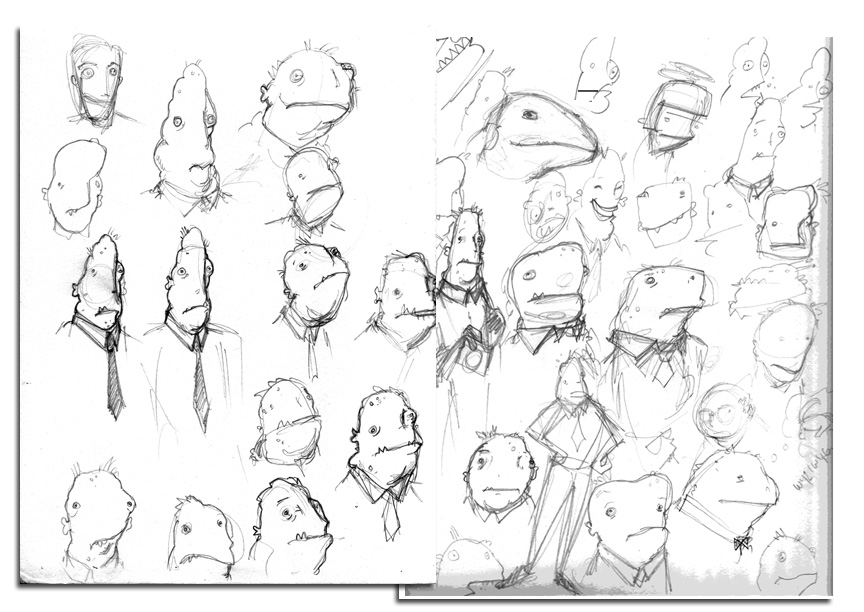
Above is my sketch when trying to come up with the look for Hector. Hector is...well, I don't want to give anything a way, but he's of a group of folks in the comic that have been physically altered in some way. As you can see, the guy I drew in the bottom right corner was the one I evenutally went with: because Hector is essentially a 'good guy' (albeit reluctantly), and a main character, I couldn't have him be too grotesque. But don't think that these other guys won't be showing up somewhere along the line. I especially like the guys in the upper right. My Troma love contiues to rear it's ugly head.

Friday, November 24, 2006

Motherland Comix


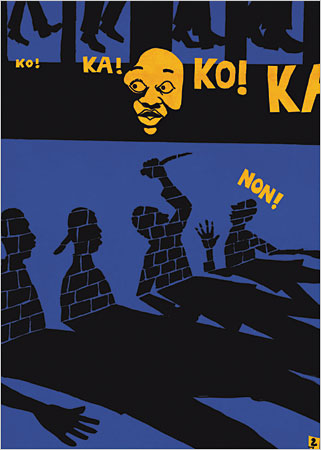
There's a fresh piece today in the NYT about a Harlem exhibition of African comix, and it's great read. (You have to become an NYT member to read it, but it's worth it, and free.) I could give you a big PC schmeal about what it means that an American news outfit is finally A.) covering African culture at all and B.) covering comix, to boot. The long and short of it is that these are great looking, and I'll leave it to the culture critics and socialogists to figure out what it all means.

I got first turned on to comix from Africa from my friend Jason, who used to live in Zimbabwae, and now lives in South Africa. One of the first things we sent me while over there was Bitterkomix, edited by the SA artist Joe Dog, a super heavy and bizzaro monthly comic collection of African comic art. It's a trip, check it out at your local comic shop if you can. They get away with stuff in there that would make Speigelman's RAW blush.

Wednesday, November 22, 2006

Drawger is Coolger


I was just turned on to Drawger yesterday, which seems very cool and very strange at the same time. It's got all these cool artists, and seems to be a (closed gate) community of cool illustration. But what's up with that site design? I'm no information architech, but it seems really unintutive to me. Maybe it's foreign. Like those brightly colored backpacks all Italians seem to love. What's up with those things?

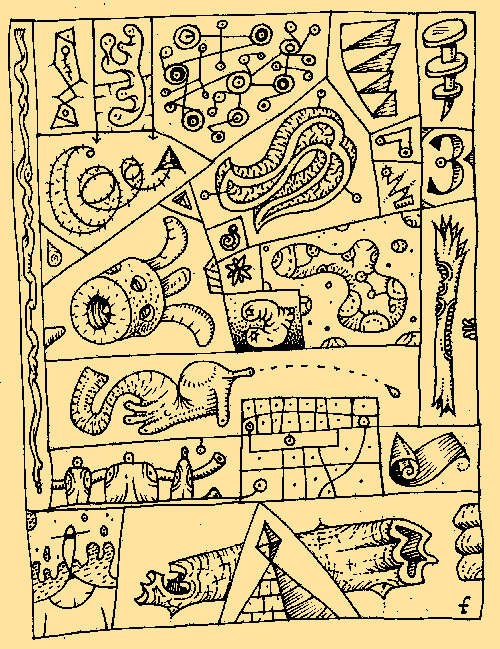
Regardless, I found my new favorite artist on Drawger, Mark S. Fisher. As with a lot of artists, his 'official portfolio stuff' is pretty OK, but it's his random stream-of-conscious doodles that really make my synapses pop.

Tuesday, November 21, 2006

Props from The Street

Some props from the folks at Street Tech. Sweet! Thanks, dudes!

Yip Yop, yo.

YipYop just gave me a little post love about the new episode. W00t! Thanks Mike, and thanks Jesse for the recommend!

A quick refit

So, you'll notice that I changed around the look of this blog a bit, to match my page a little more, which, you know, is just the professional thing to do. And also, I gave the blog the title, Good Work, which I'm not totally crazy about, but it'll do until I can think of something else. And also, I think I'm dropping the pirate diction thing: when Vanity Fair starts doing it, you know it's over. Do you think VF has a MySpace page? *shudder*

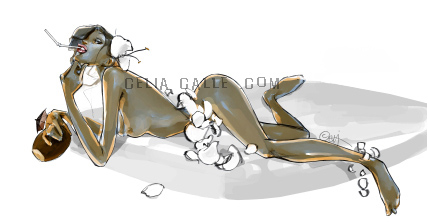
In other news, I'm wary of the 'over-animation' quality some artists and animators get from constant life drawing: everything becomes a series of gummy swoops and circles, with no real weight anymore. Having said all that, Celia Calle manages to avoid this, and what's more, she rocks my world down to a tiny little nub.

Monday, November 20, 2006

"Episode 2 off the port bow!"


Rejoice, my little deck urchins: Episode 2 of The Basic Virus is finally available. Sorry it took so long, a move of the magnitude we just achieved tends to tie your hands. But the next one's already in production. Stay tuned, and hey, let me know what you think.

Friday, November 03, 2006

Pretty, pretty sea creatures


Laurent Cliffulio, part of the Curious Pictures Group, takes my breath away. What is it with Europeans and insane modernist pictoral coolness?

Tuesday, October 31, 2006

The Tyranny of Ideas


OK, folks, put your brains back in: back to story school. This is a slightly edited email from from my friend Kevin, over at Video Haiku. It's a long one, but worth it, I feel:

So I spent two weeks in the mountains this summer with this French family (I did a handful of video haikus from there), and the father of the family is this really well respected sociologist at the Sorbonne named "Michel Maffesoli".

He basically built a name for himself, over the last 30 years or so, developing kind of an all-encompassing theory of modern society, which I found pretty interesting. It's built on a base that comes partly from Nietsche, which in turn comes from Aristotle, way back. The idea is that just like there are two different currents in dramatic storytelling - tragic and heroic - those dynamics can be applied to society as a whole.

The heroic idea postulates that man is master of his life, his destiny and his fate - that character can prevail, that great things are possible, and that victory (however it is defined) is achievable.

The tragic idea, by contrast, postulates that man is ultimately vulnerable to forces greater than himself, and ultimately doesn't choose his path - he can only react to the world around him, the choices he is given, etc.

Maffesoli applied these terms to modernity, and then postmodernity - the modern is marked by the believe in heroic ideals - we WILL change the world, utopia is possible, we can win this war and create an enduring peace, etc. And postmodernity, then, the opposite - civilization is inherently violent, there is a more or less constant amount of suffering in the world, we're doomed already by climate change, plague, nuclear war, etc. etc..

And so, in the last hundred (or maybe fifty) years, we've basically passed from a heroic epoch (expansion, colonialism, utopianism, empire) to a tragic epoch, from maybe the late 70s onward.

So how this relates to art... one of the encouraging things he talked about was the social aspect of modern (heroic) art vs. postmodern (tragic) art. Modern art as a kind of impersonal force - modern society selects its artists, its Voice, and they say sweeping and inspiring things, pointed toward the future...

Whereas the postmodern artist's role is local, immediate... in tribal societies, and pre-modern (I guess you could say tragic) societies, everyone was an artist - everyone created things, played music. You were responsible for your household and your community, so if there was going to be a party, someone would have to play the guitar and sing... plus things that seem mundane, like painting family portraits, quilting, furniture making, even cooking - were all opportunities for expression.

So now, in our current age, we're finally seeing a reemergence of community art - and digitial video, youtube, and myspace are all elements of it. People making things in spite of their limited knowledge, experience, resources, etc... just because they want to.

But things like writing, and especially cinema, (and I'm sure like gallery/fine art, painting and photography) are still in this really unhealthy "modern" place, where people want something, and pursue something, without any visible path to get there... and that's why people get frustrated and ultimately bail out altogether. Put another way, the audiences for those things aren't scalable - except, now, with blogs and flickr and youtube.

Which comes back around to your "narrativist" and "academic" construction - makes a hell of a lot of sense, and it's maybe a nicer label than "Postmodern" and "Tragic" (which are both weighted terms) - the academic is trying to confine their process and output to a modernist template, make it "fit in" to the larger world, of cinema or whatever - what's newer, better, bigger. Whereas the narrativist is choosing to make something for its own sake, to contribute to a community, and therefore naturally will evolve to a sort of equilibrium between what the community wants/needs and what the artist chooses/can provide.

While it's probably not interesting to a lot of young artists, the thought of rising only to the community level (Go Public Access!!) it is the natural order of things, that everyone doesn't get to be famous, and it fits into kind of a more mature sense of finding one's place in a system - what fits, what works - rather than insisting upon conquering that system.

But the thing is, the societal structure for "art" (except maybe music) is still set up for the Modernist era - it's kind of a relic.


Thanks, Kevin. Someone give this man a teaching post somewhere.

This brings up obviously a lot of interesting points, the largest of which is really the 900-pound gorilla in the corner: Did the rise of all-encompassing gatekeepers really signal the end of the the Heroic/Academic establishment as we know it?

To make such an argument gets you called a socialist at best, and an anarchist at worst, and while I know some of y'all may relish such labels, I'd like to keep the discussion focussed more on art. However, the intersection of these two forces- overwhelming commercial institutions involving themselves in art (or "content", in the parlance of our times) aquisition, and the established adademic meritocracy founded more on self-reflection rather than true experience- makes for a mighty convincing argument as to why artisans find it harder to get by on their craft these days.

But what does this have to do with my original dissection of the way art is made (In summary, either from the brain or from the gut). I think Kevin makes a good point, in that the established art world- as well of those "Outsiders" to the Crown - is still in the heroic/academic model: make nice with the right people, get in the right shows, get on the covers of the right magazines. This is a specifically top-down enterprise, nearly feudal in it's manifestation (witness, for example, the trend of the most famous installation artists like Cristo not even doing their own sketching anymore, but rather having a sycophantic grad student drafting at their bidding).

I guess this gets back to the arugment of whether "art" is the idea or the execution, but I find this a spurious argument. I think the only way this idea got legs was by operating under a sort of tryanny of ideas, the assumption that the idea of the hero, agreed upon by the powers that be to be "important", is so hallowed that his or her ideas are the currency. And again, politics intersects art: this to me seeems a type of aristocracy of ideas, in which the individual is nothing, and only the chosen lords are then accepted idea makers. Execution is art, by any pluralistic standards: anything else veers off into the dangerous territory of biased interests making judgements for the good of the whole: essentially, art oligarchy.

This model of society, and how it is reflected in the art world, makes sense in their comparisons in some regards: after all, "the art world" for a long time was nothing more than the results of patron's whims: even The Great Masters were nothing more than extensions of European merchant largess. Art schools have their ancestry rooted in master's apprenticeships, all of which depended on the full free flow of patronage, and as a result -surprise!- often times the master would teach specifically to what certain patrons wanted.

I suppose the one missing link for me is the notion that the 'Heroic'is, as Kevin puts, "an is master of his life, his destiny and his fate - that character can prevail, that great things are possible, and that victory (however it is defined) is achievable": to me this postivism is not based in reality: it is positive about expansion and manifest destiny, and correctness about the established norm, but not, I would argue, true 'heroism': the 'tragic' empowerment of every artist to me is a much more liberating and positive notion.

It stands to reason such a system would eventually entrench itself in the world, and if there' one thing we can all learn from history, those in power don't like to give it up. So, if Kevin's drawn parallels are correct, the established 'academic' art process and creators are merely drawing on the heroic top-down colonialist system that has controlled our age up until this time. The freeing of human thought since the early 60s: the end of colonial powerstates, civil rights, sexual and gender movements to freedom, as well as the empowerment of such user-based technologies as the internet, desktop publishing, home recording and the like, all engender the more 'Narrativist' art movement that was established early in the 20th century and is only coming to full blossom now. It means we are in a new age of enlightenment, one in which the traditional power structures, from art schools to movie studios, fall to their knees under the onslaught of single "tribal", user-generated art. It means that we all can't be on the cover of national magazines any more, but you WILL sell out a show at your local bar.

I don't think I can in good conscience call that "Tragic".

Monday, October 30, 2006

Skeleton Crew

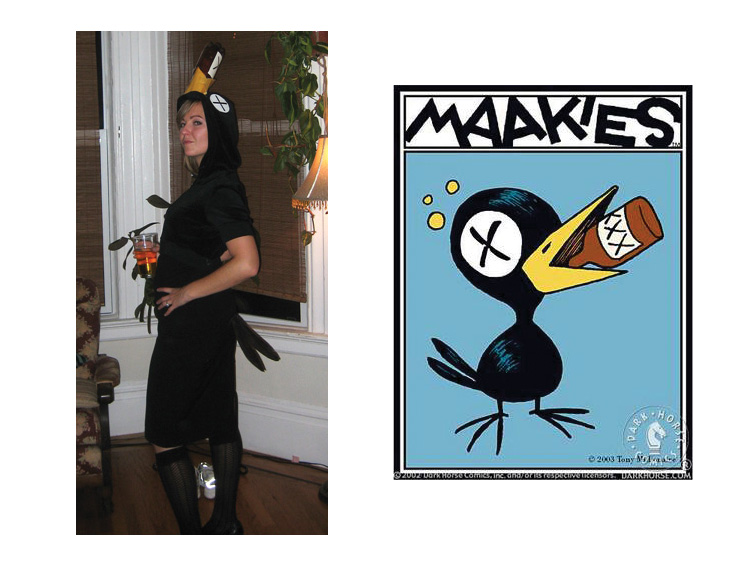
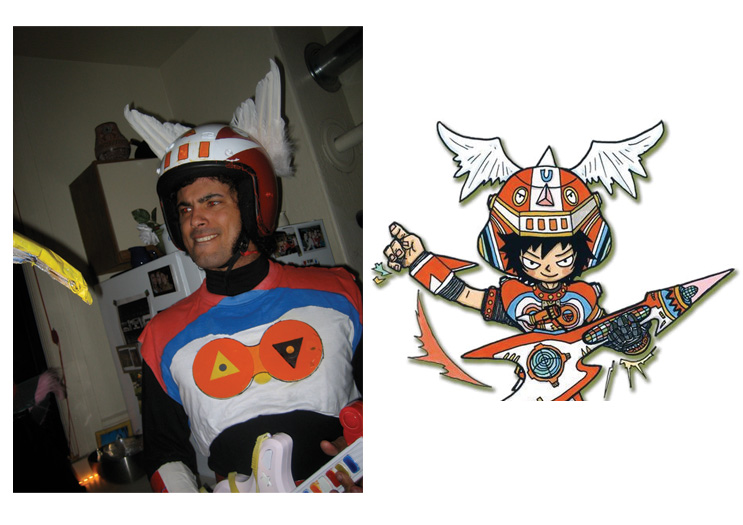
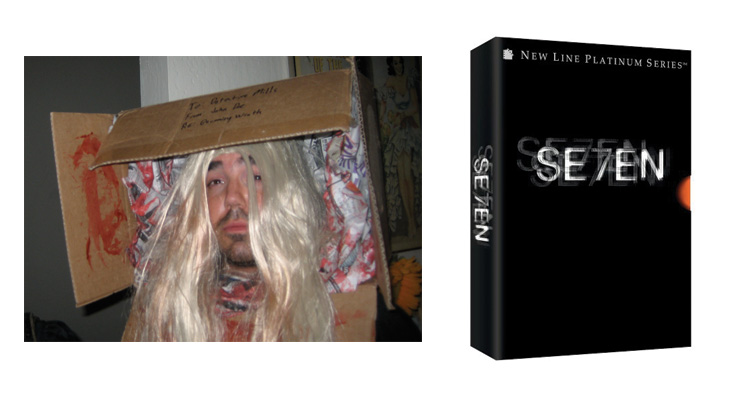
In honor of Halloween, I'm posting something a little more personal than the usual illustration and comix nerd stuff. More specifically, our costumes.

If any of you know me, I love Halloween. LOVE IT. And I never understood people that A.) Don't dress up as adults and B.) Buy their costumes. I mean, really, why bother getting up in the morning if you spend so little effort? Luckily, I have some friends who feel the same.


Don't ask me what Dove is. But it was spectacular.

Back to comic and illo stuff tomorrow. Happy Halloween, y'all.

Saturday, October 28, 2006

A good fellow captain


Just a little link love for Arthur Jones, illustrator and animator out in Brooktown.

He's got a way with whimsey that doesn't make you want to strangle yourself, but makes you rather give him money to make more. Check it out.

Friday, October 27, 2006

Peaceful waters


The view from our new home at dawn. I heart San Francisco.


Molly gets up early these days for her gig, and so, as a result, I do, too. I forgot how much I like being up real early. There's a quiet thoughtfulness, a sort of sleepy fuzziness, that takes the edge off of the world and makes everything a little more palpable. And it's great to draw in. As I get older, I'm finding less and less reasons to bar hop until 4 AM, and more reasons to get up early and work on my projects.

My god, I'm turning into my father.